

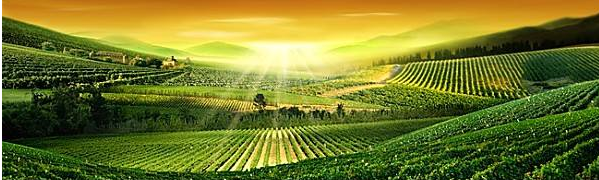

Austria, a country full of music and romance. Come here, you can listen to moving music, appreciate the beautiful scenery, taste the food with local characteristics, but you know, there are famous in the world of sweet wine.
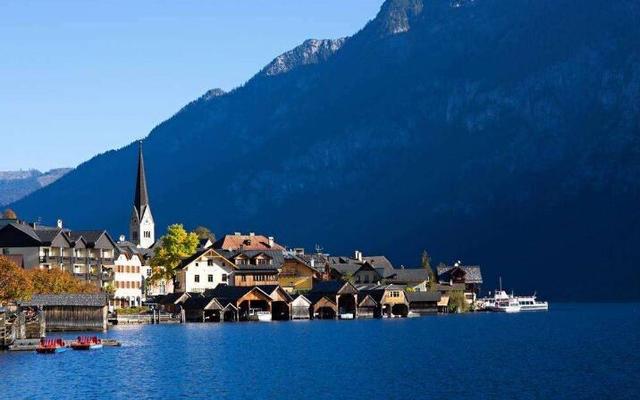
It is a country of music and romance. You can enjoy the moving music, beautiful scenery and delicious local food here, but how much do You know about its world-famous wine?
Austria, which is known as the "music capital", has been described as "the cross section of European nations". Austrian cuisine captures the essence of the nearby world, but it's a unique place to visit, and the beauty of the food can make you linger. But is that all? The austrians were too unemotional. In addition to music and food, Austrian wines enjoy a high reputation worldwide. Here's a look at Austria as a wine producer.
Talk about Austrian wine
Image: quanjing
The advantage of the climate
The climate of Austria is similar to that of Burgundy in France, which is a cool continental climate. Summer is short and winter is cold. The farther north you go, the more you will be affected by the cool north wind, and the area near the Hungarian border will be affected by the warm wind from the east.
The Danube (Danube) are the main factors influencing the climate in the region, when the water to reflect sunlight makes the grapes mature can obtain more heat and at the same time also can avoid temperature fluctuations. The vineyard is located at an altitude of 200 meters to 560 meters.
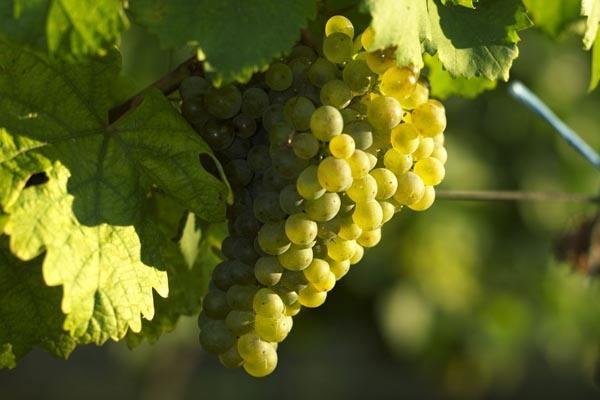
Diversity of soil
The variety of soil in the Austrian grape fields makes the Austrian wines much different. For example, in furth Weinviertel region and the Danube river Valley (Danube Valley) the soil types in the loess region is given priority to, and in Steiermark (Steiermark) region of brown soil, conglomerate and volcanic soil. Vienna (Wien), Canon (Carnuntum) and Boolean root (Burgenland (formerly) of the soil types are different, the region's main soil types have shale, clay, marl, loess and sandy soil.
Three "white"
Gruner Veltliner
It is the most widely planted variety in Austria, and the ability of Austrian wines to shine in overseas markets is largely due to the breed. Cultivated and cultivated, high quality green vitreina can produce wine full, flavor concentration, high acidity wine. When young, well - usually with citrus and stone fruit flavor, sometimes with the scent of white pepper, and with the development of aged out the aroma of the honey and baked. Most manufacturers will wine fermented in stainless steel tank and old oak barrels are widely used, there are also some makers put part of the best wine aging in new oak barrels.
Talk about Austrian wine
Image: vivino
Welschriesling, wales
Wales riesling is the second broad white grapes, dry riesling of wales, is usually very fresh, high acid, but as a result of vulnerable to your rot fungus infection, is mainly used in the production of high quality of the wines.
Riesling (Riesling)
Austrian rieslings are usually dry, with medium to full bodied and ripe peach flavors. The best riesling wines can be aged in a bottle.
In addition to the three great white grape varieties, Austria also has a variety of white grapes such as Chardonnay, muller-thurgau and Sauvignon Blanc.
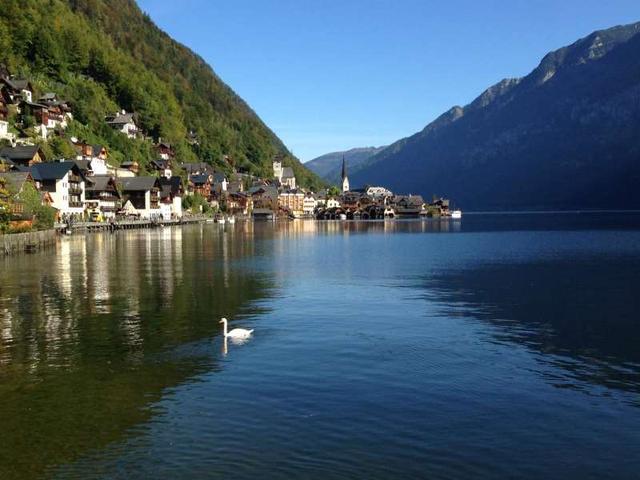
The big three "red"
Zweigelt
Zweig is the broadest variety of red grapes grown in Austria. The wines made from zweig are dark, soft and raspberry.
Blaufrankisch
Blue Franks is Austria's most prestigious red grape variety, tannin medium, high acid, with the flavor of pepper and sour cherry.
(st. Laurent)
The native variety of the oreland, which is similar to the Pinot Noir, is very common in oak barrels.
Many producers combine these native Austrian varieties with international varieties such as pinot noir, Cabernet Sauvignon or Merlot.
Famous region
(Niederosterreich/Lower Austria)
Austria is Austria's largest wine production and export area. Most of the vineyards are on the Banks of the Danube and the Slovak border. Austria has eight growing areas, the most famous of which is the Wachau region. Wachau is famous for its dry green vitriana and riesling. The wachau region of the vineyards are located in the south steep terraces, can obtain maximum light, making it well - and riesling can develop very concentrated flavor.
Talk about Austrian wine
Image: 360 ac
Burgenland
Located in the eastern part of the Austrian region, the burgenland region is next to Hungary and is known for producing high-quality red wine and liqueur. Dry white wine is also produced here, and the main products are Pinot Blanc, welsh riesling, greenwhitener and chardonnay. Neusiedlersee is a wide shallow lake in the northern part of the province that produces liqueur. Production wine vineyards located mainly in the lowlands near the lake, benefit from the autumn mist from the lake and the shore of the wetland, here is your ideal decomposing bacteria, basically can make your rotten sweet wine every year. The welsh riesling is the most widely used breed of these wines.
The best red wine from Austria comes from vineyards on the slopes of the lake. Zweig is Boolean root region the most extensive red grapes, other varieties including blue Buddha lang gram, yves saint Laurent and pinot noir, merlot and cabernet sauvignon and other international varieties.
Gourmet wine and wine collocation guide
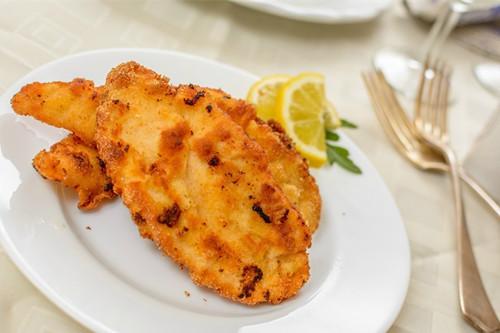
Wiener Schnitzel in Vienna
Fresh Fried pork chop with relaxed and full of well - wine, citrus and peach flavor with juicy meat in his mouth to send, thick satisfaction arises spontaneously.
Talk about Austrian wine
Image: 16 fan
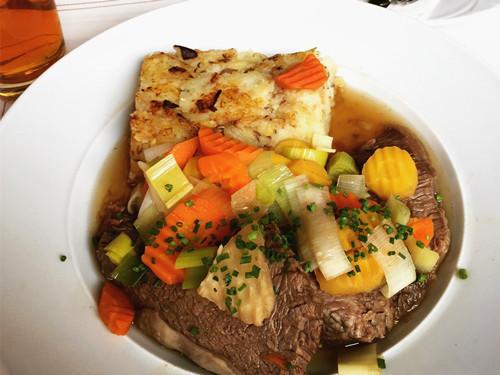
Vienna (Tafelspitz)
The stewed beef in Vienna is a veritable "water" cooked beef, with good beef stewed in the broth for 1-2 hours before it comes to the table. Every ingredient in the dish -- beef bones, bread, mountain anemones, apples, and vegetables -- gives the beef and stock a distinctive aroma. At this time, a glass of bluefin wine or saint Laurent wine can be used to better foil the aroma of food.